
Table of Contents
- Make Sports Enjoyable and Play Together
- When Your Child Losing Interest in Sports: Recognizing the Warning Signs
- How to Build Confidence in Young Athletes
- Use Positive Reinforcement for Young Athletes
- Fun Sports Practice Ideas to Reignite Interest
- Communicate Openly and Support Their Choices
- Conclusion
- Frequently Asked Questions
Last Updated: October 16, 2026
Make Sports Enjoyable and Play Together
Understanding how to keep child motivated for sports starts with making the experience fun first and competitive second.
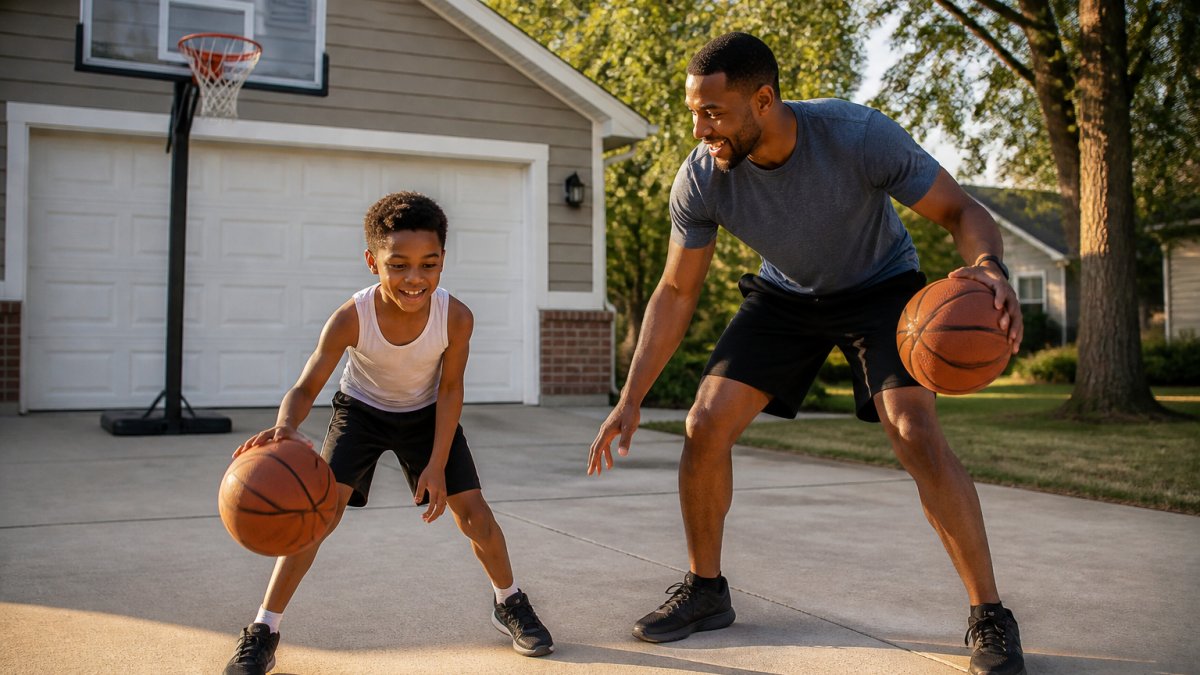
Playing alongside your child changes everything. Shoot hoops together in the driveway. Run drills as a team. Make it playful rather than serious.
Here’s what makes this work:
- Kids feel supported, not judged
- The pressure drops when it’s just play
- You model the enjoyment you want them to feel
- They learn from watching you try and fail
- Shared experiences build stronger bonds
The difference between “go practice your jump shot” and “let’s shoot some hoops together” is massive. One feels like an obligation.
Don’t wait for perfect weather or a perfectly maintained court. The driveway, a park, or even a hoop mounted on a garage is enough. Kids remember the time spent together far more than the setting.
When Your Child Losing Interest in Sports: Recognizing the Warning Signs
A child losing interest in sports often happens gradually, not overnight. Most parents miss the early signals because they look small at first. By the time you notice something’s wrong, burnout may already be setting in.
Early signals parents often miss
Watch for these signs before disengagement becomes a real problem:
- Complaints about practice that weren’t there before
- Asking to skip games or workouts more frequently
- Less enthusiasm when talking about their sport
- Avoiding the activity without a clear reason
- Spending less time on the sport when given a choice
- Seeming tired or irritable around practice time
The key is noticing the shift in behavior, not isolated complaints. Every kid has an off day. But when the pattern changes, that’s your signal to pay attention.
Ask direct questions without judgment. “You seem less excited about basketball lately. What’s going on?” Listen more than you talk. Kids often know exactly what’s wrong but need permission to say it.
When disengagement turns into burnout
Burnout looks different from simple loss of interest. A child experiencing burnout shows signs of exhaustion, not just boredom.
Red flags for burnout include:
- Physical complaints (headaches, stomachaches) before practices or games
- Significant mood changes or irritability
- Sleep problems or unusual fatigue
- Loss of interest in other activities too, not just sports
- Withdrawn behavior or social isolation
- Expressing anxiety about performance or letting people down
- Talking about quitting permanently, not just taking a break
Burnout happens when the pressure exceeds the fun. This might come from too many practices, too much competition, expectations that feel unrealistic, or a coach who emphasizes winning over development.
If your child shows multiple burnout signs, take it seriously. Pushing through burnout doesn’t build resilience, it builds resentment toward the activity and erodes confidence. The mental health impact can last longer than the physical recovery.
How to Build Confidence in Young Athletes
Confidence is the foundation for everything else. A child who believes in their ability to improve will push through challenges. A child who doubts themselves quits at the first sign of difficulty.
Building confidence in young athletes isn’t about empty praise or always winning. It’s about showing them that effort and persistence lead to real improvement.
Praise effort and improvement, not just outcomes
This is where most parents get it wrong. Saying “great game” after a loss teaches kids that results are what matter.
Effort-based praise works because it’s:
- Something the child can control
- Specific enough to reinforce the right behavior
- Honest, even after a loss or poor performance
- Focused on the process, not the result
When your child scores a basket, don’t just celebrate the outcome. Notice what they did to make it happen. “You took your time with that shot and didn’t rush it.
When they miss, frame it as learning. “You’re getting closer on your form. Keep working on that release point.”
Let them learn at their own pace
Every child develops skills at a different speed. Comparing your child to teammates or siblings kills confidence.
The right approach is meeting them where they are. If they’re still working on basic footwork, don’t pressure them to master advanced moves.
Watch for signs of readiness, not calendar age. Some ten-year-olds are ready for competitive play. Others need another year of recreational, low-pressure practice. Both are fine.
A child who feels rushed loses confidence. A child who feels supported gains it. The pace matters more than the progress.
Use Positive Reinforcement for Young Athletes
Positive reinforcement builds motivation because it shows the child that their effort creates results. Over time, this internal motivation becomes stronger than any external reward.
Set small, specific, achievable goals
Big goals are intimidating. “Get better at basketball” is too vague and too far away. Small goals are motivating because they’re reachable.
Good goals for young athletes:
- Make 5 free throws in a row (specific, measurable, achievable)
- Improve your dribbling speed by practicing 10 minutes daily for two weeks
- Work on your defensive stance in three practice sessions
- Reduce turnovers by one per game over the next month
The structure matters. Each goal should have:
- A specific behavior or skill (not “try harder”)
- A clear way to measure progress
- A realistic timeline
- A reason it matters to the child, not just to you
When your child hits a goal, celebrate it. Not with money or big rewards, but with genuine recognition. “You set that goal and you hit it. That’s what happens when you focus on something.”
Focus on constructive feedback and persistence
Feedback without judgment keeps kids improving. Judgment makes them defensive or discouraged.
Constructive feedback:
- Describes what you saw (not what you think of the performance)
- Points to one thing to work on (not everything at once)
- Includes how to improve it (not just what’s wrong)
- Assumes effort and good intent
GOOD: “Your passes are getting better. Work on following through with your wrist a bit more and they’ll be even stronger.”
BAD: “Your passes are sloppy. You’re not focusing.”
The difference is huge. One invites improvement. The other invites shame.
Persistence is a skill you teach by modeling it. When you make mistakes, acknowledge them and try again. When something is hard, don’t give up immediately.
Fun Sports Practice Ideas to Reignite Interest
Sometimes motivation drops simply because practice feels boring or repetitive. Changing up how you train can reignite enthusiasm without changing the sport itself.
Vary practice formats and add friendly competition
The same drills every day get stale. Mix it up. One day focus on fundamentals. Another day play games. Another day work on specific skills your child wants to improve.
Friendly competition within practice keeps things engaging:
- Play one-on-one against your child or a sibling
- Create shooting contests with different point values for different distances
- Set up relay races or timed challenges
- Play modified games that focus on one skill
- Track weekly progress on specific challenges
The key word is friendly. The goal is fun and improvement, not winning at all costs.
With Blue5 Basketball, young athletes can access structured workouts that include competitive elements and achievement tracking.
Track progress visibly and celebrate small wins
Kids need to see that they’re improving. Invisible progress doesn’t feel like progress.
Make progress visible:
- Keep a simple log of what they practiced and what improved
- Record video of skills over time so they can see the difference
- Track free throw percentage or shooting accuracy weekly
- Note when they try something new or push themselves harder
- Create a visible streak of practice days completed
Celebrate the wins, even small ones. “You made 7 free throws today. Last week it was 5. That’s progress.” Kids remember these moments. They build confidence.
Let your child choose what to track. If they care about it, they’ll stay motivated to improve it. If you choose, it feels like another thing you’re making them do.
Communicate Openly and Support Their Choices
The relationship between you and your child matters more than any training program. If they feel heard and supported, they’ll stay engaged. If they feel pressured or judged, they’ll quit.
Listen without judgment when they want to quit
When a child says they want to quit, most parents immediately try to convince them otherwise. That usually backfires.
“Tell me what’s going on. I want to understand.” Then actually listen. Don’t interrupt. Don’t defend the sport or the coach.
Sometimes kids want to quit because:
- They’re frustrated with their progress
- A coach is too harsh or dismissive
- The social dynamics on the team are difficult
- They want to try something else
- The time commitment is too much
- They feel pressure they don’t want
Some of these are solvable. Some aren’t. But you won’t know until you listen.
Once you understand, you can help them problem-solve.
If they genuinely want to quit and the reasons are sound, let them quit.
Age-appropriate motivation strategies
What motivates a nine-year-old is different from what motivates a fifteen-year-old. Adjust your approach as they grow.
Younger kids (8-12):
- Respond to fun and play
- Need frequent, specific praise
- Want to feel part of a team
- Enjoy visible progress tracking
- Are motivated by your participation and enthusiasm
Teenagers (13-18):
- Care more about autonomy and choice
- Want honest feedback, not empty praise
- Are motivated by peers and social connection
- Respond to challenge and skill development
- Need to understand the “why” behind training
With teenagers especially, explain how practice builds the skills they care about. Connect effort to outcomes they value. Give them input on goals and training methods. Let them lead their own development with your support, not your direction.
The most powerful motivator at any age is feeling genuinely supported by someone who believes in them. That’s you.
Conclusion
The fundamentals of how to keep child motivated for sports come down to three things: making it fun, supporting their growth, and listening to what they actually need.
Blue5 Basketball is built around this principle. Our app, created by former Duke assistant coach and NBA lottery pick Will Avery, provides structured workouts that kids can do at home with built-in motivation through achievements, streaks, and friendly competition.
Start your free 7-day trial with Blue5 Basketball and see how structured, gamified training can complement the support you’re already giving.
| Motivation Strategy | Best Age | Key Focus | How It Works |
|---|---|---|---|
| Play together | 8-12 | Fun and connection | Parent and child train as a team |
| Effort-based praise | All ages | Process over outcome | Recognize hard work, not just results |
| Small, specific goals | 8-15 | Measurable progress | Achievable targets they can hit |
| Varied practice formats | All ages | Engagement | Change drills to keep things fresh |
| Open communication | 13-18 | Autonomy and choice | Listen, then problem-solve together |
Frequently Asked Questions
What should I do if my child wants to quit a sport mid-season?
Listen first without judgment. Ask what’s driving the desire to quit: is it pressure, boredom, a conflict with teammates, or something else? If it’s a temporary frustration after a setback, help them work through it. If it’s genuine burnout or a mismatch with the sport, quitting may be the right choice. Frame it as a learning opportunity, not a failure. Discuss what they might try instead, and avoid pressure to stick it out if they’re genuinely unhappy.
How can I keep my child motivated to play sports when progress feels slow?
Progress in sports rarely feels linear. Focus on effort-based goals rather than outcome goals: ‘You improved your free throw percentage by 5%’ beats ‘You didn’t make the starting lineup.’ Break skill development into smaller milestones, mastering a specific dribble move, running a faster mile time, or executing one defensive technique. Celebrate these wins visibly. Remind them that professional athletes spent years building fundamentals. Patience and persistence matter more than quick results.
How can I help my child stay motivated after a loss or setback?
Normalize setbacks as part of learning. Avoid dismissing their disappointment with phrases like ‘it’s just a game.’ Instead, ask what they learned from the experience and what they’d do differently next time. Help them separate their worth from their performance, losing a game doesn’t make them a loser. Encourage them to focus on what they can control: effort, attitude, and preparation. Short-term setbacks build long-term resilience.
Can my child really improve basketball skills at home without a full court?
Yes. Fundamental basketball skills, ball handling, footwork, shooting mechanics, and conditioning, can be developed in a driveway, garage, or small space. A hoop and ball are the main requirements. Structured, purposeful practice beats casual play. Apps designed by professional coaches can guide focused workouts that build skills progressively, no matter the space. Consistency and quality of practice matter far more than court size.