
Last Updated: October 23, 2026
Quick Summary
Basketball training for shy kids requires a different strategy than standard coaching, focusing on solo skill development first, gradual exposure to peer play, and building confidence through personal progress rather than competition. Start with individual drills like dribbling and shooting, add a trusted adult for partner work, then slowly introduce small-group games before full-team play.
- Start with 5-10 minutes of solo dribbling per session, three times per week, before introducing group play.
- Use small-group games like Around the World and Horse that have clear rules and low social stakes.
- Track individual progress weekly with specific metrics like free throw percentage or consecutive dribbles, never comparing to teammates.
- Begin team play with 2v2 games before progressing to 3v3, 4v4, and 5v5 as comfort grows.
- Choose coaches who ask questions, celebrate effort, and modify drills for individual needs rather than pushing kids to toughen up.
Table of Contents
- Why Basketball Training for Shy Kids Needs a Different Approach
- Essential Basketball Drills for Kids Who Are Building Confidence
- Fun Basketball Games for Kids That Build Social Comfort
- Structuring Basketball Practice Plans for Kids at Their Pace
- How to Keep a Child Motivated for Sports When They’re Naturally Quiet
- Choosing the Right Coach and Environment for Your Shy Child
- How Parents Can Support Basketball Development at Home
- Overcoming Fear of Mistakes and Peer Judgment
- Frequently Asked Questions
Why Basketball Training for Shy Kids Needs a Different Approach
Basketball training for shy kids requires a different strategy than standard coaching. Most programs assume all players respond the same way to group drills, competition, and pressure.
A shy child feels peer judgment more acutely and needs time to build comfort before full-team play.
The opportunity: shy kids often develop exceptional focus and discipline in the right environment. They listen carefully, practice with intention, and commit to skill mastery.
Essential Basketball Drills for Kids Who Are Building Confidence
Solo Dribbling and Ball-Handling Drills
Solo drills are where shy kids find their footing. They control the pace and outcome, with no one watching or judging mistakes.
Basic dribbling progression:
- Stationary dribbling: Keep the ball bouncing in one spot for 30 seconds, eyes up
- Figure-eight dribbling: Weave the ball around legs without looking down
- Dribble in a square: Move the ball around an imaginary box on the court
- Dribble with weak hand: Repeat all drills using only the non-dominant hand
These drills build coordination and muscle memory, and let kids succeed repeatedly without an audience.
Start with 5-10 minutes of solo dribbling per session, extending to 15-20 as comfort grows. Consistency matters: three times per week beats one intense session.
Let them keep track of their own progress. A simple chart showing “dribbled for 2 minutes without looking down” creates ownership. Kids who measure their own improvement stay more motivated than those waiting for external validation.
Shooting Form and Layup Fundamentals
Shooting is where shy kids often find their basketball identity.
Proper shooting form:
- Feet shoulder-width apart, knees slightly bent
- Ball held at shoulder height, elbow under the ball
- Release with fingertips, not palm
- Follow through with wrist flick downward
- Eyes on target from release to follow-through
Start three feet from the basket and let them make shots consistently before moving back. Early shooting success builds confidence faster than anything else in basketball.
Layups come next: easier than jump shots and more game-relevant.
Practice shooting 10-15 minutes per session with a parent or coach rebounding. That’s support, not pressure: one trusted adult is different from a crowd of peers.
Passing and Catching Without Pressure
Passing bridges solo skills and team play. It requires another person, but not a full team or competition.
Beginner passing progression:
- Chest pass from 6 feet away, stationary
- Chest pass while moving slowly side to side
- Bounce pass from 6 feet, stationary
- Overhead pass for longer distances
- One-handed passes for variety
Start with one trusted person, not a group. Pass back and forth for 5 minutes, keeping it simple and low-pressure.
The goal isn’t perfect technique but comfort passing without anxiety.
Once comfortable, add a second person, then a third. Gradually expand the group as comfort grows.
Fun Basketball Games for Kids That Build Social Comfort
Low-Pressure Group Activities
Games matter: they’re how kids learn to play, not just execute drills.
Games that work for shy kids:
- Around the World: Players shoot from different spots around the key, moving forward only after makes
- Knockout: Players line up at the free throw line, try to make shots before the person behind them
- Horse: Players take turns shooting from different spots; missing adds a letter
- Pig: Similar to Horse but with fewer letters needed to lose
- Dribble Relay: Teams dribble around cones, passing baton-style
These games have clear rules, don’t require constant social interaction, and let kids focus on skill execution rather than social dynamics.
Avoid games emphasizing speed, aggression, or elimination early on, or where one player is singled out and failure is public.
Keep game sessions short, 10-15 minutes. End on a positive note. One successful round beats three rounds where frustration builds.
The best games for shy kids have predictable rules, clear objectives, and low social stakes. They reward skill execution, not social dominance.
Gradual Exposure to Team Play
Full-team play is the goal, not the starting point. Gradual exposure works better.
Start with 2v2. Two shy kids plus two older players or coaches. Explain the rules clearly.
Move to 3v3 after a few sessions, then 4v4, then 5v5.
Watch for overwhelm, withdrawal, hesitation, or refusal to shoot. If you see it, dial back to smaller games.
The goal is sustainable engagement, not speed.
Structuring Basketball Practice Plans for Kids at Their Pace
Weekly Practice Structure for Beginners
A good practice plan for shy kids balances solo work, partner work, small-group play, and gradual team exposure.
Sample weekly structure for beginners:
| Day | Focus | Duration | Key Elements |
|---|---|---|---|
| Monday | Solo fundamentals | 20-30 min | Dribbling, shooting form, footwork |
| Tuesday | Partner drills | 20-30 min | Passing, catching, one-on-one basics |
| Wednesday | Small-group games | 25-35 min | 2v2 or 3v3, low-pressure competition |
| Thursday | Solo skill refinement | 20-30 min | Repeat Monday focus, build consistency |
| Friday | Mixed activity | 30-40 min | Combine all elements, introduce 4v4 play |
| Weekend | Optional | 20-30 min | Parent-child shooting or dribbling |
Each session should include a warm-up, skill work, and a game or competitive element. Keep warm-ups fun, light dribbling, a few easy shots, dynamic stretching.
Structure matters for shy kids. They appreciate predictability. When they know what to expect, anxiety drops. When practice follows the same pattern each week, they can focus on execution rather than worrying about what’s coming next.
Tracking Progress Without Comparison
Shy kids often struggle with motivation when they see peers progressing faster. The fix is simple: track individual progress, not relative standing.
What to measure:
- Number of consecutive dribbles without looking down
- Free throw percentage over a week
- Number of successful passes in a 5-minute drill
- Time spent in small-group play without withdrawal
- Confidence level (on a simple 1-10 scale)
Record these weekly. Show the child the improvement. “Last week you made 4 free throws out of 10.
Never compare to teammates.
Celebrate small wins loudly. Made three free throws in a row? That’s a milestone. Dribbled without looking down for a full minute? That’s huge.
The biggest mistake parents make is pushing too hard for results. Shy kids respond better to patience and consistency than pressure. Push too hard and they quit. Back off slightly and they’ll surprise you with their commitment.
How to Keep a Child Motivated for Sports When They’re Naturally Quiet
Celebrating Small Wins and Personal Milestones
Motivation for shy kids comes from internal progress, not external recognition. They don’t need a trophy ceremony. They need to see evidence that they’re improving.
Create visible milestones. “This week, we’re working on free throws.
Document progress visually. A simple chart on the wall showing weekly shooting percentages, dribbling time, or minutes played in games works better than any trophy.
Share progress with family.
Using Gamified Training to Build Engagement
Gamification works for shy kids when it removes pressure and adds structure.
Blue5 Basketball uses this approach, tracking daily workouts, awarding badges for consistency, and showing progress through visual feedback.
Effective gamification elements:
- Daily streak counter: “You’ve practiced 7 days in a row”
- Achievement badges: “Free throw specialist” after 50 makes
- Progress bars: Visual representation of weekly goals
- Leaderboards (optional, personal only): Show improvement over time, not comparison to others
The key is making the game rewarding for effort and consistency, not just results.
Apps and structured programs work well here because they remove the social comparison element. It’s just you, your workouts, and your progress.
Choosing the Right Coach and Environment for Your Shy Child
The coach matters more than the facility. A great coach can work magic with a shy kid.
Look for coaches who:
- Ask questions rather than just give commands
- Celebrate effort and improvement, not just results
- Modify drills for individual needs
- Create a low-pressure environment early on
- Build relationships with players, not just teach skills
- Show patience with slower progression
Interview potential coaches. Ask how they’d handle a shy kid. Their answer tells you everything.
The environment matters too. A massive gym with 50 kids running around creates anxiety. A smaller facility with 8-10 kids allows focus.
Many communities offer recreational basketball leagues specifically for younger kids.
How Parents Can Support Basketball Development at Home
Parent support is where shy kids find their edge. One parent believing in them and showing up consistently changes everything.
What parents can do:
- Set up a hoop in the driveway if possible (even a portable one works)
- Shoot with your child 2-3 times per week
- Rebound and offer encouragement, not correction
- Ask what they learned in practice, not how they performed
- Avoid comparing them to siblings or teammates
- Model effort and improvement in your own activities
- Attend games without pressure (“I’m here to watch you play, not to judge”)
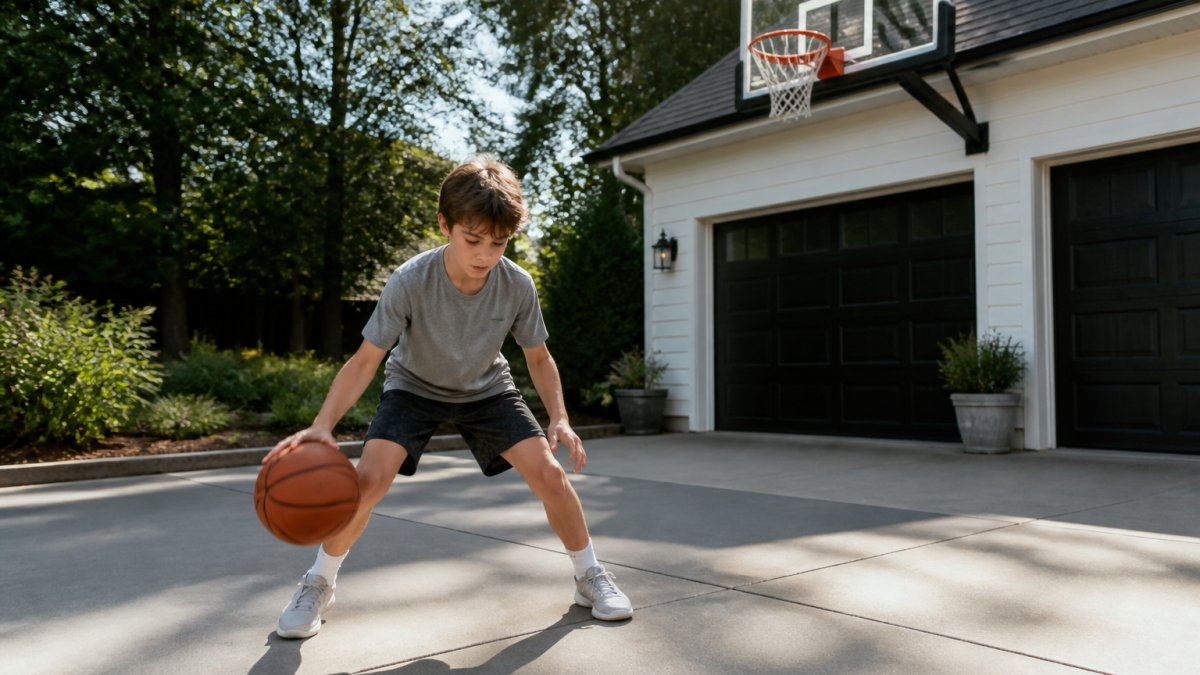
The driveway is magical for shy kids. It’s private. It’s low-stakes. It’s where they can practice without an audience.
According to research on youth sports participation, parental involvement is one of the strongest predictors of long-term engagement in sports.
Talk about basketball as a skill to develop, not a talent to prove.
Overcoming Fear of Mistakes and Peer Judgment
Shy kids often fear making mistakes more than anything else.
The antidote is exposure and reframing. Everyone makes mistakes in basketball. Constantly.
Start by normalizing mistakes in practice.
Play games where mistakes are expected and frequent.
Research from American Psychological Association on youth anxiety shows that gradual exposure to feared situations reduces anxiety more effectively than avoidance.
Peer judgment is often imagined, not real.
The path forward for shy kids in basketball isn’t about forcing them into situations they’re not ready for. It’s about building skills and confidence at their own pace, in environments that support rather than threaten them. Small steps, consistent practice, and one adult who believes in them, that’s the formula that works.
Blue5 Basketball was built with this understanding.
Start with solo drills. Add a trusted adult. Gradually introduce peer play.
Frequently Asked Questions
How can I help a shy child feel more confident playing basketball?
Start with solo practice in a low-pressure environment, then gradually introduce small-group activities where your child can build comfort. Focus on skill development rather than competition initially. Praise effort and improvement, not just results. Choose a coach who understands shy temperaments and creates an encouraging atmosphere. Consistent, structured basketball practice plans help shy kids develop confidence through mastery and repetition.
What are some easy basketball drills for beginners who get nervous around others?
Begin with solo dribbling drills, cone weaving, and shooting form practice at home or in an empty gym. Progress to partner drills with one trusted person before moving to group activities. Ball-handling exercises, behind-the-back dribble practice, and layup repetition build skill without social pressure. Structured basketball drills for kids let beginners practice fundamentals at their own pace, which reduces anxiety and builds competence before group play.
How do you make basketball practice fun for kids who prefer to stay quiet?
Use fun basketball games for kids that focus on personal achievement rather than competition: obstacle courses, shooting challenges with point systems, and skill-based achievements. Gamified training with badges and progress tracking keeps kids motivated without requiring verbal participation. Set individual goals, celebrate personal records, and allow kids to progress at their own speed. This approach maintains engagement while respecting their natural temperament.
How long should a shy child practice basketball each day to see real improvement?
Consistency matters more than duration. Most beginners benefit from 30-45 minutes of focused practice 3-4 times per week. Shorter, regular sessions build confidence better than sporadic long practices. Structured basketball practice plans for kids break training into manageable blocks that prevent overwhelm. Progress tracking helps shy children see improvement over weeks and months, which reinforces motivation and confidence in their basketball abilities.
